
Introduction
Piranhas are freshwater fish native to South America, primarily found in the Amazon and Orinoco river basins. They are widely recognized for their sharp teeth, strong bite, and intense reputation, which has made them one of the most talked-about fish species in global media and popular culture. Despite their fearsome image, piranhas are far more complex and ecologically important than the “dangerous predator” label often suggests. In reality, most species are not aggressive toward humans and spend their lives feeding on fish, insects, plants, and decaying organic matter within their natural habitat.
The global fascination with piranhas comes largely from documentaries, films, and exaggerated storytelling that highlight rare aggressive behavior while ignoring their normal ecological role. According to biological studies and field observations, piranhas are highly adaptive fish that respond strongly to environmental conditions such as food availability and water levels. They are not mindless attackers but survival-oriented species that play an important role in maintaining river ecosystems. Their behavior is shaped more by opportunity and environment than by instinctive aggression toward large animals like humans.
Understanding piranhas requires separating fact from fiction. While they do possess the physical capability to inflict painful bites, actual incidents involving humans are extremely rare and usually occur under unusual conditions. This article presents a clear, structured, and human-centered explanation of piranhas, their biology, behavior, habitat, and the myths that surround them, offering a balanced perspective based on available scientific knowledge and real-world observations.
Scientific Classification and Evolution of Piranhas
Piranhas belong to the family Serrasalmidae, a group of freshwater fish that also includes pacus and related species. Within this family, there are more than 30 recognized species of piranhas, each with unique behavioral patterns, physical traits, and dietary preferences. Some species are primarily carnivorous, while others are omnivorous and consume a balanced mix of plant and animal matter. This diversity highlights that “piranha” is not a single uniform identity but a broader classification of related fish with varying ecological roles.
The most commonly known species is the red-bellied piranha, often used in media representations due to its striking appearance and reputation. However, scientific research shows that even this species does not consistently behave as a dangerous predator. Behavior varies significantly depending on environmental conditions such as food availability, water temperature, and group dynamics. Evolutionarily, piranhas have developed strong jaws, sharp teeth, and heightened sensory systems that allow them to detect movement and vibrations in water efficiently.
Based on available biological studies, piranhas share evolutionary connections with more peaceful fish species within their family group. This challenges the common misconception that they are purely aggressive predators. Instead, they are highly adapted survival fish that have evolved over millions of years in dynamic freshwater ecosystems, where flexibility in diet and behavior is essential for survival.
Natural Habitat – Where Piranhas Live and Thrive
Piranhas are primarily distributed across freshwater systems in South America, with the Amazon River basin being their most well-known habitat. They are also found in the Orinoco River and various tributaries, lakes, and floodplain environments across countries such as Brazil, Peru, Colombia, Bolivia, and Venezuela. These regions provide the warm, nutrient-rich waters that support their survival and reproduction.
Their preferred habitats include slow-moving rivers, shallow lagoons, and flooded forest areas that expand during the rainy season. Seasonal flooding plays a major role in shaping their behavior, as it increases access to food sources and creates new ecological niches. During dry seasons, when water levels drop, piranhas may become more concentrated in smaller pools, which can increase competition among individuals.
Media coverage often emphasizes their presence in dense river environments, but ecological studies suggest that their behavior is closely tied to environmental stability rather than aggression. In stable conditions with sufficient food supply, piranhas tend to display relatively calm and predictable feeding patterns. Their ability to adapt to changing water conditions makes them one of the most resilient freshwater fish in their ecosystem.
Physical Features and Biological Adaptations
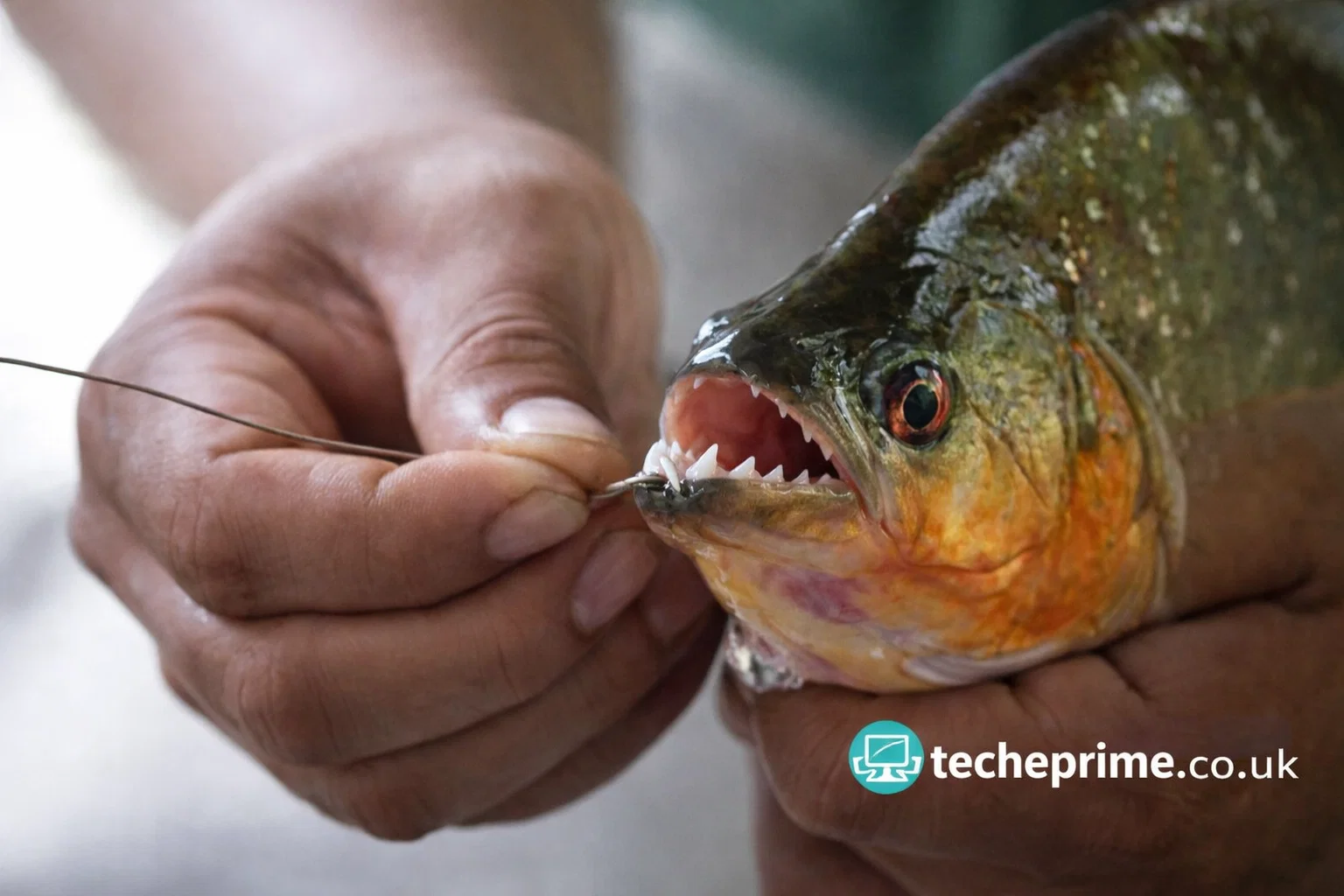
Piranhas typically range from small to medium size, with most species measuring between 12 to 35 centimeters in length. Their bodies are compact and laterally compressed, allowing for quick bursts of speed and agile movement in water. One of their most distinctive features is their jaw structure, which is equipped with sharp, triangular teeth designed for cutting and tearing food efficiently.
These teeth are continuously replaced throughout their lifetime, ensuring that they remain effective for feeding. Their bite strength is relatively powerful for their size, making them capable of processing tough food materials such as flesh, scales, and plant matter. However, this physical ability does not automatically translate into aggressive behavior toward large animals.
Coloration varies across species. Some piranhas display silver tones with dark markings, while others, such as the red-bellied variety, exhibit reddish hues on their underside. These color differences often play roles in species identification, camouflage, or communication within groups. According to public biological observations, their sensory systems are highly developed, allowing them to detect vibrations and movement in water with precision, which helps them locate food efficiently.
Diet and Feeding Behavior in the Wild
The diet of piranhas is far more diverse than commonly believed. While they are often labeled as carnivorous predators, many species are opportunistic feeders that consume a combination of fish, insects, plant material, seeds, and decaying organic matter. This flexible diet allows them to survive in changing environmental conditions where food availability may fluctuate throughout the year.
In natural settings, piranhas often function as scavengers rather than active hunters. They play a role in consuming dead or weakened animals, contributing to the natural cleaning of river ecosystems. This scavenging behavior is essential for maintaining water quality and reducing the spread of disease within aquatic environments.
According to field observations, aggressive feeding behavior may increase during periods of food scarcity, particularly in dry seasons when water levels are low and resources are limited. However, such behavior is typically focused on small prey and does not represent coordinated attacks on large animals. Their feeding responses are often triggered by movement and sensory cues rather than deliberate targeting of larger organisms.
Social Structure and Group Behavior
Piranhas are social fish that often live in groups known as schools. This group behavior provides protection against predators and increases survival efficiency. Living in schools reduces the risk of individual predation, as larger groups create confusion for potential threats and improve collective awareness of danger.
Within these groups, behavior is not strictly hierarchical but is influenced by size, strength, and environmental conditions. Dominance may exist in feeding situations, but cooperation remains essential for survival. Contrary to popular belief, piranha groups are not constantly aggressive or chaotic; instead, they often display structured and coordinated movement patterns.
Based on available research, schooling behavior also helps regulate feeding activity. When food is abundant, aggression levels tend to decrease as competition is reduced. In contrast, scarcity may temporarily increase competitive behavior. This adaptability is one of the key reasons piranhas have survived successfully in diverse and changing freshwater ecosystems over long evolutionary periods.
Are Piranhas Dangerous to Humans?
The perception of piranhas as dangerous man-eating fish is largely influenced by media representation rather than scientific evidence. While piranhas are capable of biting, documented cases involving humans are rare and typically non-fatal. Most incidents occur under specific environmental conditions such as low water levels, food scarcity, or accidental human contact in their natural habitat.
According to ecological studies, humans are not part of the natural diet of piranhas. They do not actively hunt or target humans as prey. In most situations, piranhas tend to avoid larger animals unless they feel threatened or are responding to unusual environmental stress. Reports of large-scale attacks are largely exaggerated or misinterpreted in popular culture.
Field observations suggest that piranha bites on humans are usually defensive or accidental rather than predatory. Even in cases where bites occur, they are typically minor injuries rather than severe attacks. This reinforces the understanding that their reputation as highly dangerous predators is significantly overstated.
Reproduction and Life Cycle
Piranhas reproduce during warm seasons when environmental conditions are favorable. Females lay eggs in shallow waters, often near vegetation or protected areas that provide safety from predators. After spawning, males frequently take on the role of guarding the nest, protecting eggs until they hatch.
This parental care behavior is relatively uncommon among many fish species and highlights a more complex aspect of piranha biology. Once hatched, juvenile piranhas remain in protected areas until they are strong enough to survive independently. During early life stages, they feed primarily on small insects, plankton, and plant matter.
As they mature, their diet gradually expands to include a wider range of food sources. Growth and development are closely influenced by environmental conditions such as water temperature, food availability, and population density. Their life cycle reflects a strong adaptation to seasonal changes in South American freshwater ecosystems.
Ecological Importance of Piranhas
Piranhas play a significant role in maintaining ecological balance within freshwater systems. By feeding on weak, sick, or dead organisms, they help regulate fish populations and support natural decomposition processes. This contributes to nutrient recycling and overall river health.
They also serve as an important food source for larger predators such as birds, caimans, and bigger fish species. This places them in a key position within the aquatic food chain. Without species like piranhas, river ecosystems could become unbalanced, leading to overpopulation of certain species and accumulation of organic waste.
Environmental studies suggest that their presence supports biodiversity by influencing prey behavior and maintaining natural selection pressures within aquatic systems. Their role is therefore more ecological than aggressive, contributing to the stability of their habitat.
Myths, Media Influence, and Misconceptions
Much of what people believe about piranhas comes from movies, documentaries, and exaggerated storytelling. Hollywood has often portrayed them as aggressive swarming predators capable of consuming large animals within seconds. However, such depictions do not reflect real biological behavior.
In reality, piranhas are cautious and opportunistic feeders. They do not form coordinated attacks on large prey as commonly shown in fictional media. Instead, their feeding behavior is influenced by environmental triggers and small-scale competition.
Public interviews and scientific reports consistently emphasize that piranhas are misunderstood animals whose reputation has been shaped more by fear than by fact. While they are capable of inflicting bites, their behavior is far more controlled and ecological than destructive or chaotic.
Human Interaction and Real-World Observations
In regions where piranhas naturally exist, local communities often coexist with them without significant conflict. Fishermen and river residents are aware of their presence and typically take simple precautions when entering the water.
Documented human interactions are mostly minor and involve accidental contact rather than intentional aggression from the fish. In most cases, piranhas avoid human presence altogether, especially in stable environmental conditions.
These observations highlight the importance of understanding animal behavior within its natural context rather than relying on exaggerated external portrayals. Piranhas, when observed in the wild, behave more like adaptive survival fish than aggressive predators.
Conservation and Environmental Challenges
Although piranhas themselves are not currently endangered, their habitats face increasing environmental pressure. Deforestation, pollution, climate change, and human activity are affecting freshwater ecosystems across South America.
Protecting river systems like the Amazon indirectly supports piranha populations along with countless other species. Conservation efforts are primarily focused on preserving habitat quality and ecological balance rather than targeting specific fish species.
Healthy ecosystems ensure that piranhas continue to play their natural role within the food chain while maintaining biodiversity in their environment.
Conclusion – Understanding the Real Nature of Piranhas
Piranhas are often misunderstood due to long-standing myths and exaggerated media portrayals. In reality, they are highly adaptive freshwater fish that play an essential role in maintaining ecological balance within South American river systems. Their behavior is shaped by environment, survival needs, and seasonal conditions rather than uncontrolled aggression.
While they possess strong physical features and can bite when threatened or provoked, they are not the relentless predators often depicted in fiction. Instead, they are complex, socially structured fish that contribute significantly to their ecosystem.
A clearer understanding of piranhas helps replace fear with knowledge. When viewed through a scientific and ecological lens, they represent not danger, but adaptation, survival, and balance within one of the world’s most diverse freshwater environments.
FAQs About Piranhas
Are piranhas really dangerous to humans?
No, attacks are extremely rare and usually occur only in unusual conditions like food scarcity.
Where do piranhas live?
They are mainly found in the Amazon River basin and other freshwater systems in South America.
What do piranhas eat?
They eat fish, insects, plants, and sometimes dead animals depending on availability.
Do piranhas attack in groups?
Group feeding exists but is mostly focused on small prey, not large animals or humans.
How big can piranhas grow?
Most species grow between 5 to 15 inches, depending on environmental conditions.
Are all piranhas carnivorous?
No, many species are omnivores and consume a mix of plant and animal food.
Why are piranhas famous?
They are famous due to myths, movies, and their sharp teeth, which create a fearsome reputation.

